Where ERW Carbon Steel Pipe Actually Gets Used in Industrial Projects

ERW carbon steel pipe shows up in more places than most people realize. It’s one of those materials that tends to be invisible when it’s working correctly — which, in a well-specified system, is most of the time. Understanding where it’s commonly used helps with both specification decisions and supplier conversations.
Here’s a practical rundown of the main application areas and what drives the choice of ERW carbon steel in each one.
Oil and Gas Gathering and Distribution
One of the largest application areas for ERW carbon steel pipe is oil and gas infrastructure — specifically gathering lines that collect product from wellheads and distribution lines that move it to processing facilities or transmission pipelines.
These lines operate at moderate pressures and typically run through environments where some corrosion management is needed but where the extreme conditions of high-pressure transmission lines aren’t present. ERW pipe produced to API 5L is the standard specification for this service. The combination of mechanical strength, weldability, and cost-effectiveness makes it the default choice across a significant portion of the upstream and midstream pipeline network.
The API 5L standard for ERW pipe has evolved considerably over the decades and now includes rigorous weld seam inspection requirements — hydrostatic testing, non-destructive examination of the weld zone — that address the historical concerns about weld quality that gave ERW a cautious reputation in some quarters.
Structural and Construction Applications
ERW carbon steel pipe is widely used in structural applications: building frames, support columns, handrails, guardrails, and mechanical structures of all kinds. In these applications, the pipe is functioning as a structural element rather than a fluid containment system, so the requirements are different — yield strength, dimensional consistency, and weldability matter more than pressure rating.
ASTM A53 Grade B ERW is commonly specified for structural mechanical tubing applications. The consistent outside diameter that comes from the ERW manufacturing process — formed from flat strip to precise dimensional tolerances — makes it well-suited for applications where fit and appearance matter as much as load capacity.
Water and Wastewater Systems
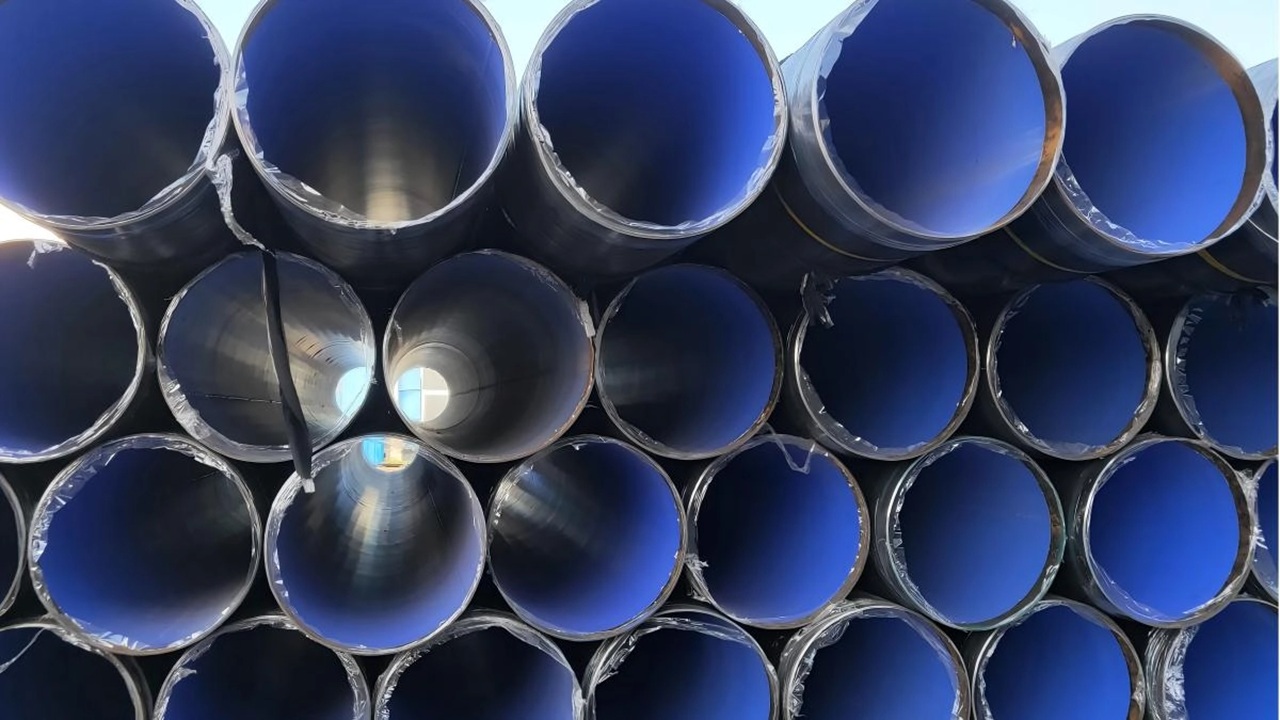
Municipal and industrial water distribution, irrigation systems, and wastewater infrastructure all make extensive use of ERW carbon steel pipe, typically with internal lining or coating systems to manage corrosion.
For water transmission at scale — large-diameter mains, pump station discharge lines, raw water intake systems — carbon steel’s combination of high strength and relatively low cost per unit length makes it competitive with alternatives like ductile iron or prestressed concrete cylinder pipe. ERW production allows large-diameter pipe to be manufactured efficiently from plate, which is why you’ll find ERW carbon steel pipe in some of the largest water infrastructure projects.
The corrosion management side is critical in these applications. Cement mortar lining, fusion-bonded epoxy, and polyethylene lining are all used depending on the service, with external coatings and cathodic protection addressing the soil-side corrosion exposure.
HVAC and Mechanical Systems
In commercial and industrial buildings, ERW Carbon Steel Pipe is the standard material for chilled water, heating hot water, condenser water, and steam distribution within mechanical systems. The pressure and temperature requirements of building HVAC systems fall well within ERW carbon steel’s capabilities, and the consistent dimensions and weldability make it practical to work with in the field.
Schedule 40 and Schedule 80 ERW pipe to ASTM A53 covers the majority of HVAC mechanical piping. The wide availability of fittings, valves, and joining methods designed around standard pipe dimensions makes ERW carbon steel a straightforward choice for mechanical contractors.
Agricultural Irrigation
Large-scale agricultural irrigation systems — center pivots, lateral move systems, and underground distribution networks — use ERW carbon steel pipe extensively. The pressure requirements are relatively modest, the volumes are large, and cost per meter of installed pipe matters a great deal at agricultural scale.
Galvanized ERW carbon steel pipe is common in above-ground irrigation applications, where the zinc coating provides corrosion protection against soil moisture and weather exposure without the cost of stainless or the weight of heavier wall pipe. The consistent dimensions of ERW pipe also simplify the fittings and connection hardware that irrigation systems depend on.
Industrial Process Piping
In manufacturing plants, chemical facilities, and general industrial processes, ERW carbon steel pipe handles a wide range of utility and process services — compressed air distribution, cooling water, process water, general chemical transfer where carbon steel is chemically compatible with the fluid.
For these applications, the selection between ERW and seamless often comes down to what the applicable piping code requires for the specific service class. ASME B31.3, which governs most industrial process piping, permits ERW pipe in a wide range of normal fluid service applications. Where the code requires seamless — typically in higher pressure or higher temperature classes — the specification will say so explicitly.
What These Applications Have in Common
Across all of these use cases, the pattern is consistent: ERW carbon steel pipe performs well in applications where the service conditions are within its rated capabilities, documentation and traceability requirements can be met with standard mill certification, and cost efficiency over the installed length matters.
It’s not the right choice for every application — there are service conditions where seamless is required and environments where corrosion resistance demands a different material entirely. But for the broad middle of industrial piping applications, ERW carbon steel pipe is the workhorse of the material palette, and understanding where it fits is the starting point for specifying it correctly.