When to Weld and When to Rivet: A Complete Decision Guide
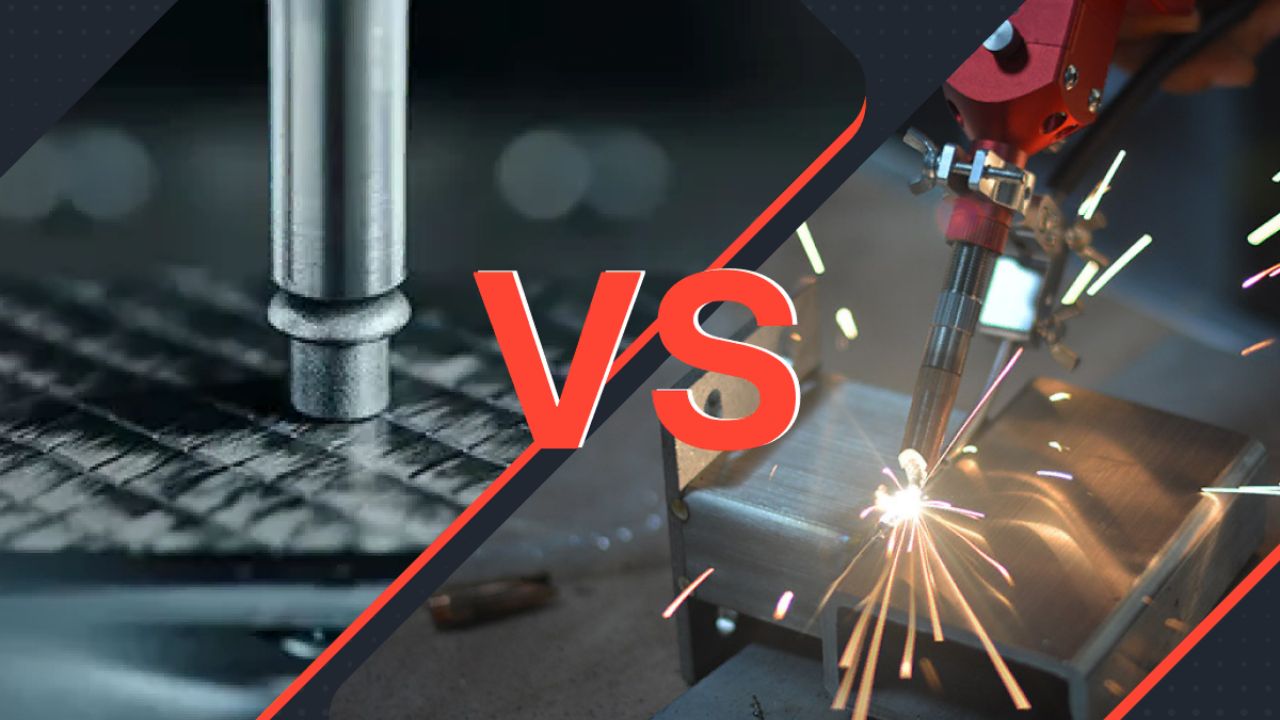
The choice made between welding and riveting in metal fabrication is a determining factor in the strength, stability, and overall success of a project. The two are common in industries. Both are used in totally different ways. It is not merely a matter of choice to know when to weld and when to rivet because it depends on the type of material, design needs, cost factors, and the use purpose. This article describes riveting vs welding, the working of each of these methods, and gives an easy-to-understand guide on the proper way to choose the right method.
Understanding Welding as a Permanent Solution
Welding is a process whereby two pieces of metal are joined together with high heat. The filler material is usually added to the materials that are melted at the joint and cooled to a single, solid structure. This forms a connection that is normally strong, as strong as or even stronger than the base metal itself.
Since welding is used to create a smooth bond, it finds application in areas where strength and rigidity are required. Heavy frame structures, machinery parts, and load-carrying systems are also dependent on welded connections to resist stress. Moreover, welding produces airtight and watertight seals, and it is, therefore, very suitable for tanks, pipes, and enclosures that require no leakage.
Nevertheless, welding is a process that involves special tools and expertise. Thermal distortion may also be experienced due to the high temperatures involved, especially when using thin sheet metal. This renders it inappropriate for sensitive or heat-sensitive parts.
Understanding Riveting as a Flexible Alternative
Riveting is a mechanical method of fastening materials that involves the use of a metal pin or rivet. The rivet is then placed in a hole that has been pre-drilled and then flattened at one end in order to hold the materials together. This is a cold process of joining as opposed to welding since no heat is used in this process.
Riveting is especially applicable in cases where thin materials are involved, or when the components may be destroyed by the heat. It does not change the material structure with heat, and therefore it does not change the original shape and finish of the metal. This is very critical in the case of pre-coated or painted surfaces.
The other main benefit of riveting is the fact that it has the capability to weld dissimilar materials. Rivets can be used in connecting metals that are hard to join together, like aluminum, steel, and the like. It is also comparatively easy and affordable, and can therefore be used by amateurs and for large-scale production.
Material Thickness and Heat Sensitivity
Another factor in the decision-making process is material characteristics. During welding, thick metals are capable of dealing with the heat generated without major deformation, thus making welding a sure option. In contrast, thin sheet metal is very prone to warping if it is exposed to high temperatures.
These thinner materials are more appropriate for riveting since they do not produce heat at all. It makes sure that the flat surfaces are kept flat and precision is upheld during the fabrication process. Riveting provides a more predictable and safer result in projects with sensitive parts or strict tolerances.
Cost, Skill Level, and Production Needs
It also depends on the cost and skill requirement to decide which process, between welding and riveting, is more appropriate. Welding is generally more expensive to start up with equipment, safety equipment, and training. It also requires greater skill levels to give uniform and quality output.
Riveting, on the other hand, is less barricaded. The tools are less expensive, and it is a simple process to learn. This renders it a good choice when prototyping, in small workshops, or when the budget is minimal.
Both techniques can be applied in the large-scale production based on the design. Welding is commonly used on permanent structural components, whereas riveting is used on structures that need speed, flexibility, or are easy to maintain.
Conclusion
The decision between welding and riveting is to be made based on the needs of a particular project. The choice of welding is primarily because the application requires the highest level of strength, clean appearance, and non-leaking properties. Riveting is, though, more suitable for thin materials, mixed-metal construction, and where flexibility and convenience of operation are of paramount importance.
The type of material, load conditions, cost, and long-term maintenance are the key factors that fabricators can take into account to select the most effective joining method. The right choice is not only better quality of the final product, but also the possibility of making costly errors during the production process is reduced.